
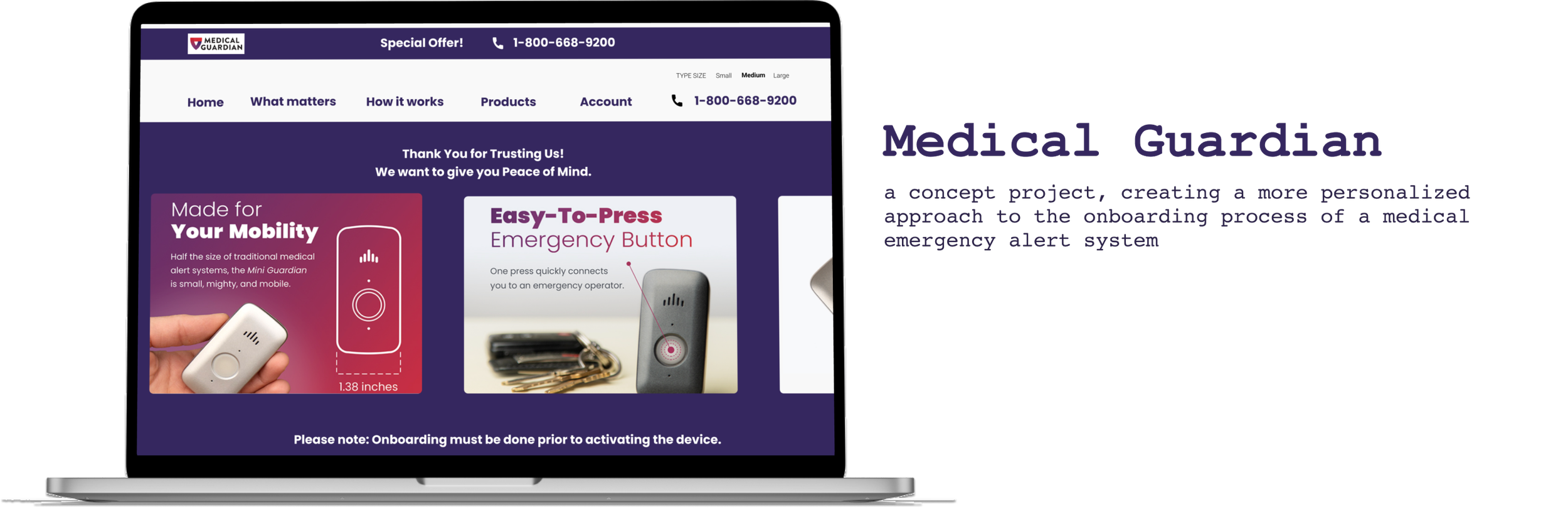

Medical Guardian is one of the leading providers of Personal Emergency Response system (PERS) or medical alert devices. The company offers several on-the-go and in-the-home monitoring for fall and other emergencies keeping love ones safe and providing peace of mind for caregivers.
My role: user research and interviews, comparative and competitive analysis, heuristic analysis, design collaboration, provided wireframing from initial low fidelity to high fidelity wireframes, prototyping, usability testing and data analysis
Design Sprint Timeframe: 3 weeks
“Our clients now understand that this is a service that keeps them young rather than makes them old. The button allows a client to continue to live an active, independent lifestyle”
- Geoff Gross, CEO and founder of Medical Guardian
The Challenge
The company wants to enhance their product offerings and how it delivers its services. Based on the data the company has collected about how, when, where and why their devices are used, Medical Guardian has noticed that people seem reluctant to activate and use their devices. They have also received feedback that the necessary communication with and between caregivers could be more timely and useful.
Medical Guardian wants to simplify, yet enhance their offerings.
User research
-

user interviews
to get to know our users, we conducted interviews at nursing facilities and met with patients who have been using medical fall alert devices and caregivers who have assisted with purchasing and setting up these devices for them
-
product reviews
understanding the company’s process of onboarding and activation of devices to understand what the users go through when they purchase a product. We also looked into reviews provided by users on various PERS.
-
comparatives and competitive inspiration
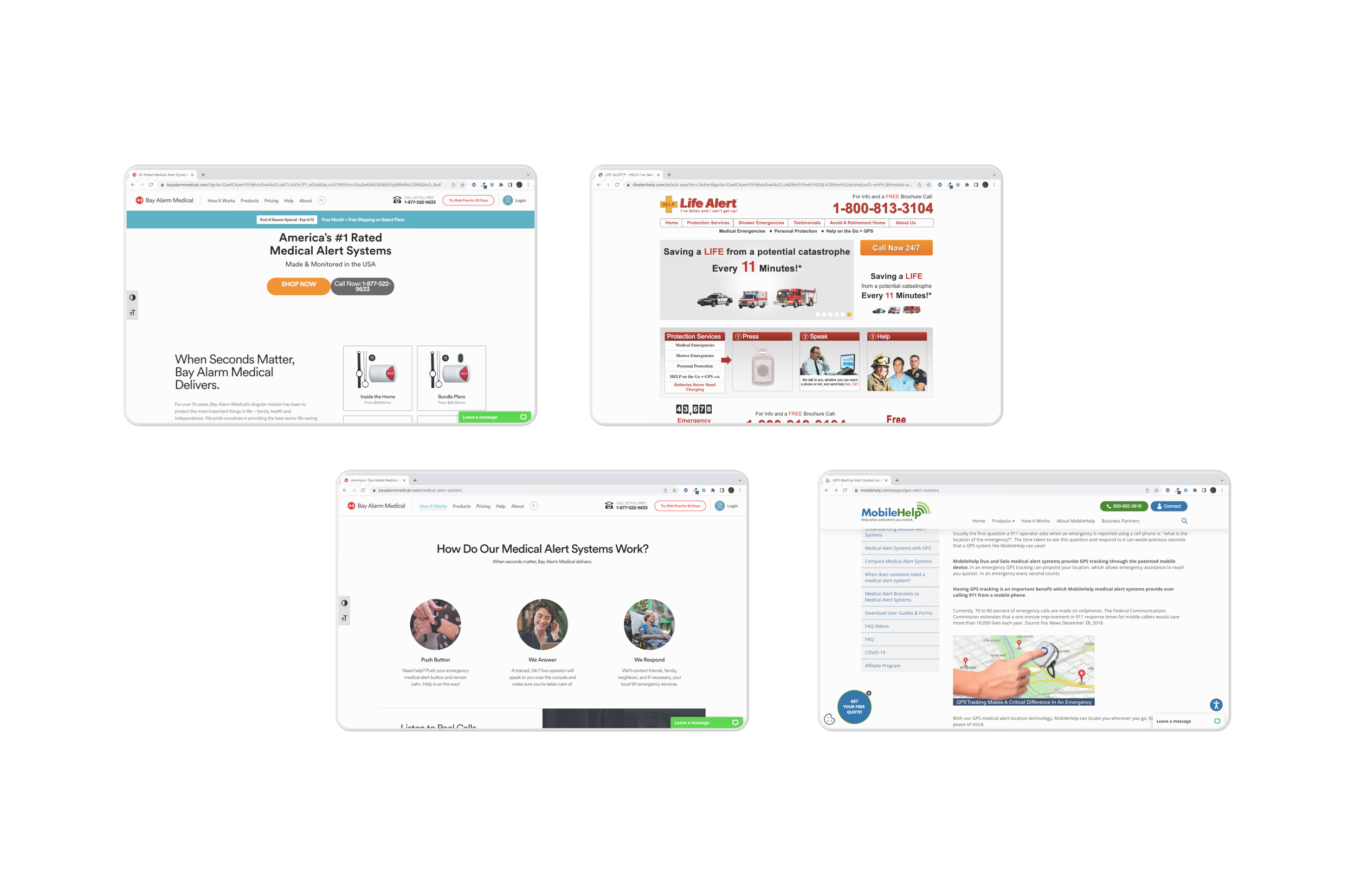
Looking into the market for inspiration, we tapped into other companies that provide medical alert devices, we also looked into companies that highlights customer trusts in their culture and their company mission
Identifying our target users
There are different groups impacted by this product:
subscriber or user of the medical device
a possible caregiver
customer response center
emergency services
For us to understand our users and identify our primary target users, we went to interview subscribers/users of medical device, caregivers and a representative from the response center of Medical Guardian with the goals of identifying:
what are the feedback with regards to use/purchase of products
emergency response process
platforms that are used for access from purchase to activation and use of device
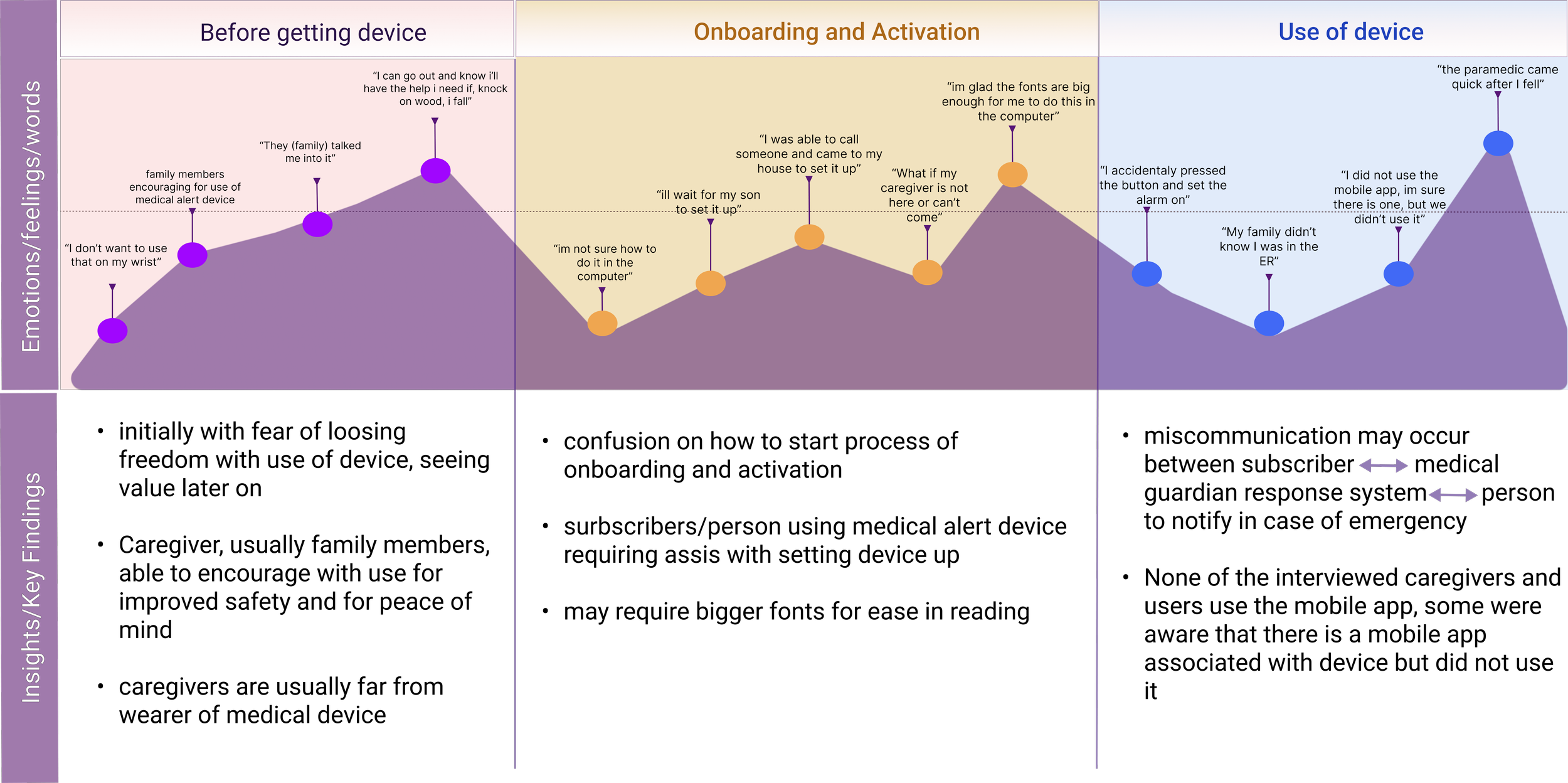
From interview data , we were able to highlight the ups and downs of a subscriber’s (device wearer’s) and the caregiver’s journey. These data gave us a better understanding of the roles the different stakeholder’s play which includes discussions about a possible use of a medical alert device (before getting the device, to the purchase of the device, prompting onboarding and activation of device, and finally to the actual use of the device and it’s supporting mobile app.
Insights from interviews
Initial hesitancy for use of a PERS (Personal Emergency Response service) device
Users of device are initially fearful that it may take away their independence
Caregivers usually advocates for having PERS device for improved safety of their loved ones
confusion arising during onboarding and activation process
Mobile applications of Personal Emergency Response Services are rarely used or not at all by users, either by the caregivers or the device wearer
defining our target user
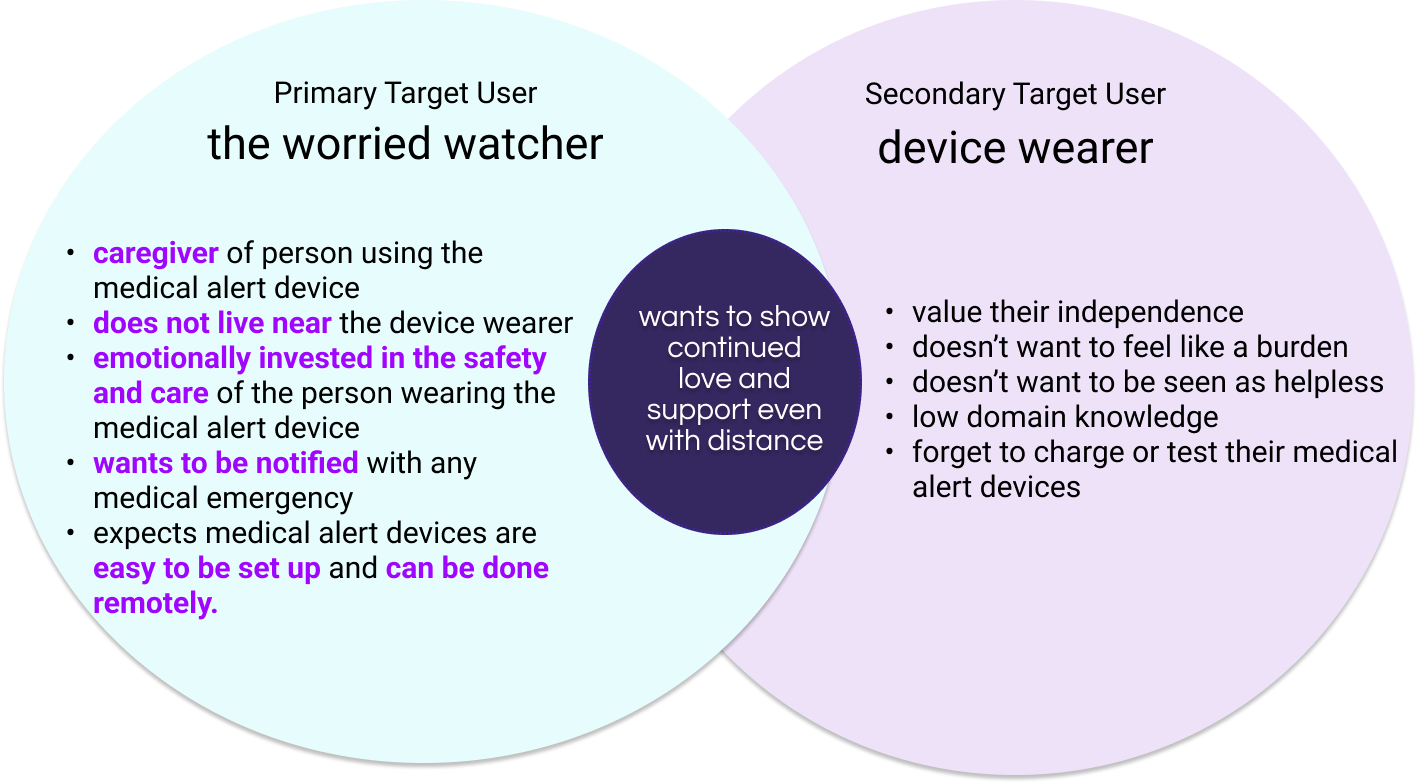
From data gathered during the User Research Phase, we were able to identify characteristics of our users, identifying two potential stakeholders that are the primary and secondary users.
Primary target user, the person who takes care of the medical device wearer, the person who handles the purchase and ultimately the onboarding and activation of the device.
Secondary target user, the person who wears the medical alert device; usually family related to the primary user and wants to assist during the onboarding and activation process but has difficulty with onboarding and activating of device.
Comparative research
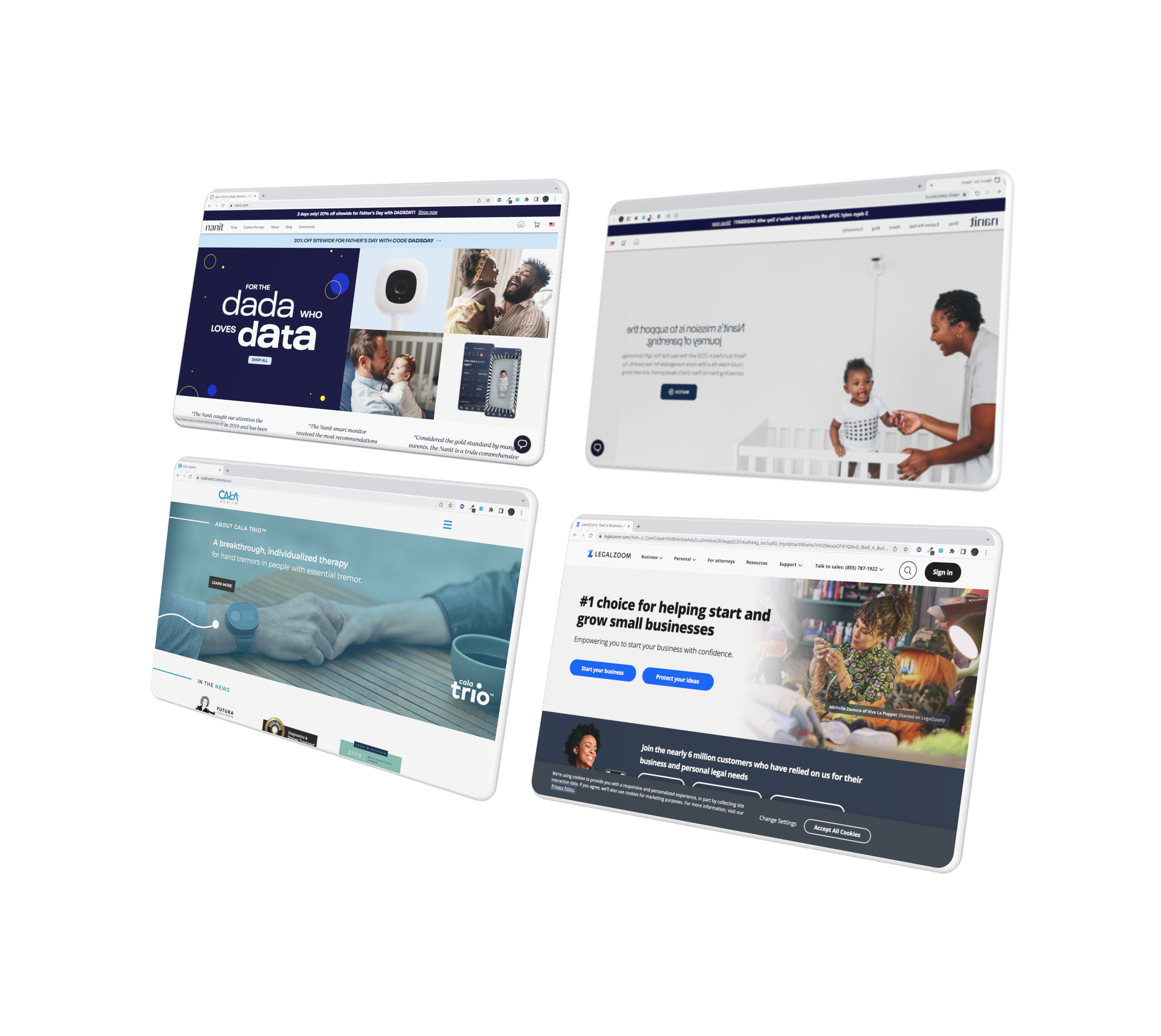
These companies share in the goal of taking care of love ones, and a company that users trust to deliver protection. We have observed that their web base presence show the following:
use of human images that highlight their values
provide immediate attention to what the company is about and their goals on their home page
provide graphics of their products throughout the different interfaces
immediate and center CTA button for purchase or to learn more about their products
providing stories from users of their products as motivation/insight on company performance and product benefits
Competitive research
Proposed Solution
We have learned from research data that there is a missed opportunity in the on-boarding process to address specific wants and needs of the device users leading to a lack of connection and effective communication between call center and device wearer.
To address this, our team proposed on improving the Onboarding and Activation experience via the website to make the process less frustrating and more efficient for the business, the device wearer and the caregiver and also to facilitate a deeper connection between call center and device wearer to allow the device wearer to feel taken care of but not in a sense “loosing his/her/their independence”
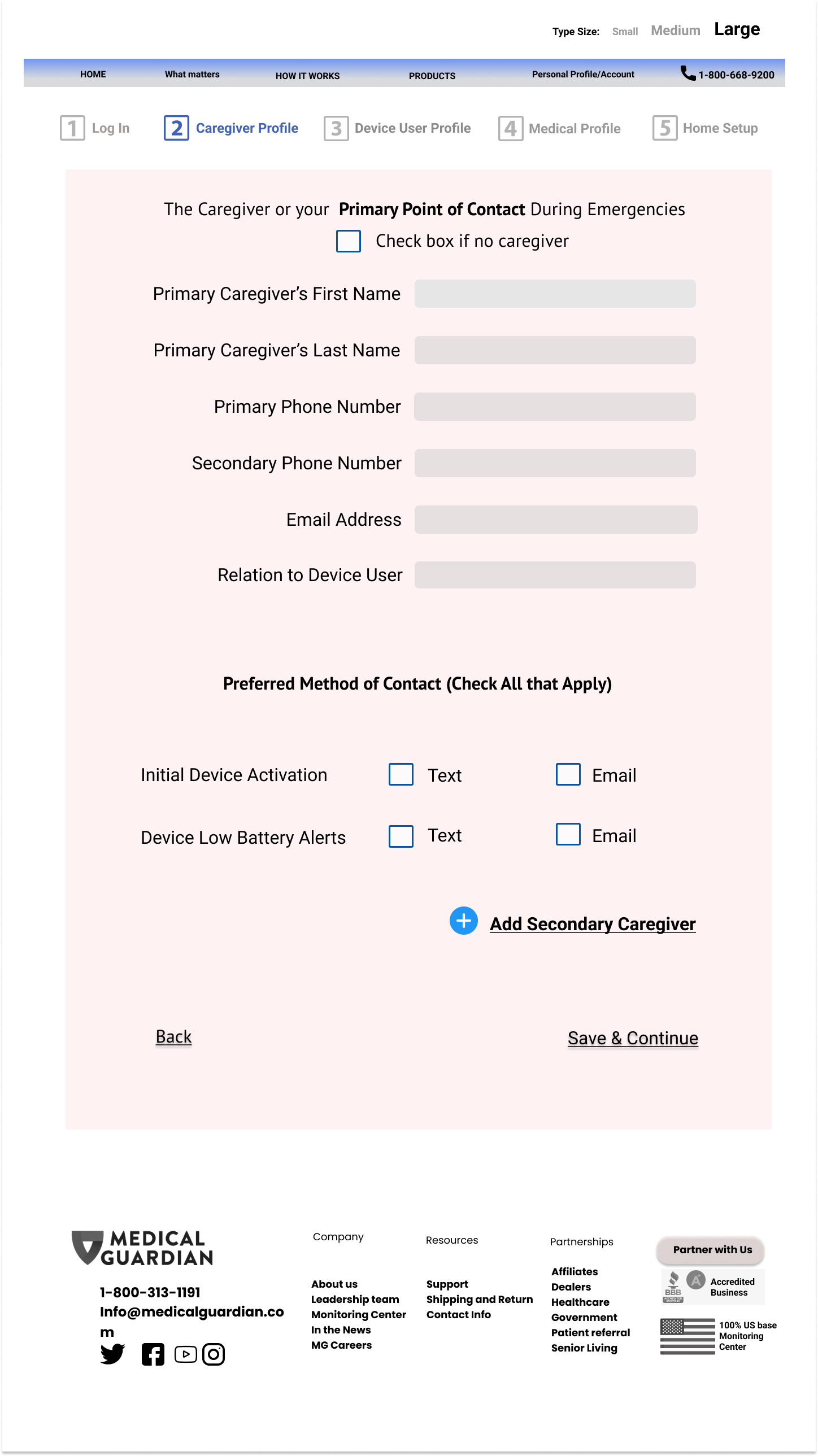
adding caregiver information and preferences of being reach for improved response time during emergency contact by the customer response center
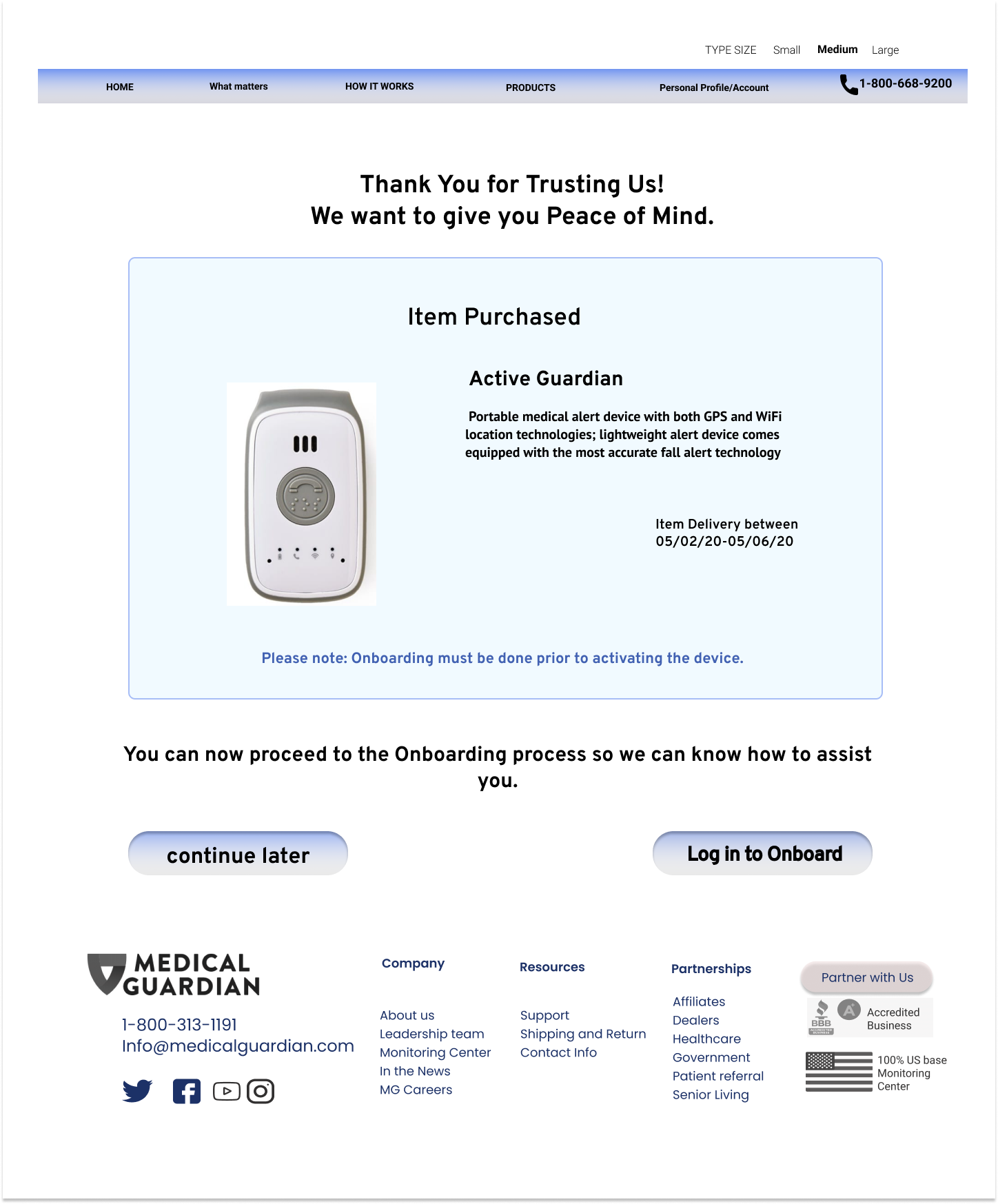
Upon purchase, option for starting on-boarding process so caregivers who assisted with purchase can assist
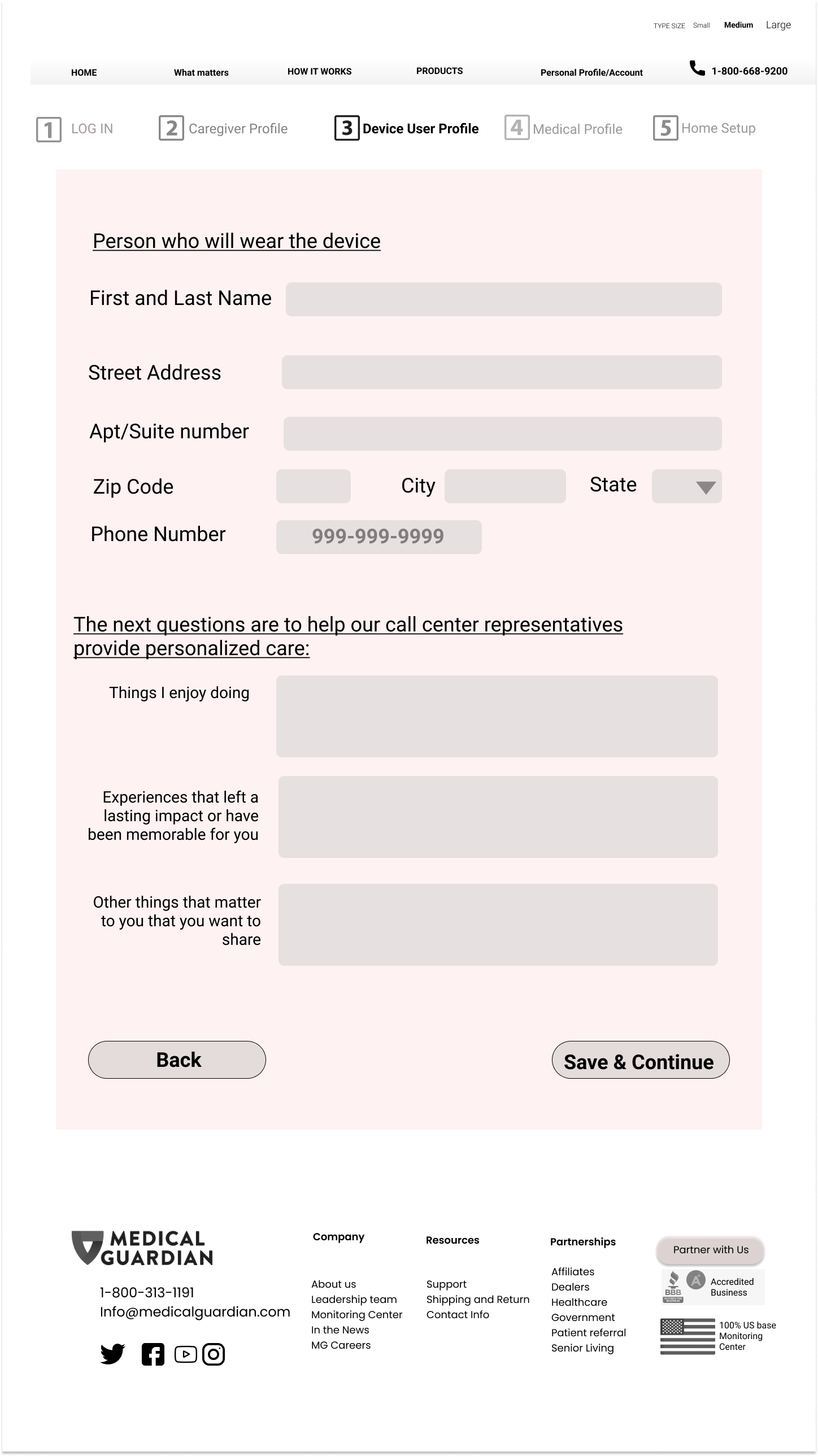
Use of Social workers and Physical therapy documentation as reference for providing more insight on device user’s medical profile and home set up for easy information relay to paramedics during emergency situations.
including low fi to high fidelity wireframes